
Ultimate Guide to Underwriter-Broker Collaboration
How brokers and underwriters collaborate to protect receivables, set credit limits, manage claims, and improve financing with clear communication and data tools.

With your business receivables insured, you leverage your acounts receivable to borrow more money at a relatively low incremental cost.

How brokers and underwriters collaborate to protect receivables, set credit limits, manage claims, and improve financing with clear communication and data tools.

Predictive analytics uses internal and external data to spot defaults up to 12 months early, cut bad debt, and tailor credit insurance.
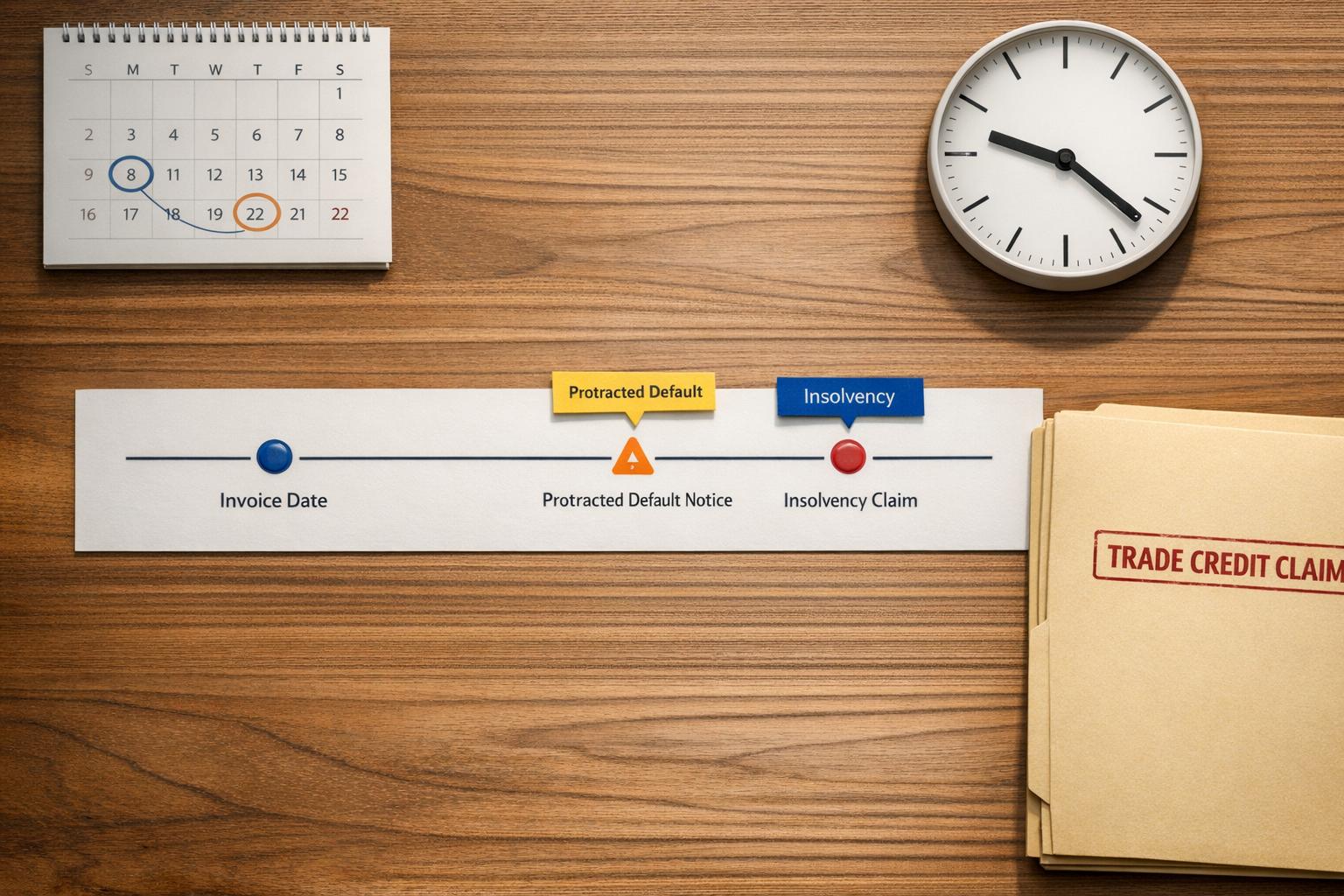
When to notify insurers of trade credit claims: deadlines by claim type (insolvency, protracted default), required documents, and steps to avoid denials.

Undiversified credit portfolios magnify borrower, sector, and regional shocks; diversification and credit insurance cut tail losses and ease capital pressure.

How to build fair, transparent credit models: bias testing, explainable AI, data privacy (machine unlearning), audits, and regulatory compliance for lenders.

Protect B2B sellers from unpaid invoices—credit insurance covers insolvency, defaults and political risks, reimbursing up to 90–95% while stabilizing cash flow.

Contact CreditInsurance.com
A. No. Credit life or credit disability insurance is obtained by individuals to help pay debts in case of loss of income. Business credit insurance (also known as trade credit insurance, export credit insurance, or just credit insurance) is used to reduce the risk of non-payment in B2B transactions and is obtained by the company offering the goods or services, rather than the company receiving the goods or services.
A. There is no additional fee to use a broker. By law, you will pay the same rates for the coverage you choose whether you use a broker or work directly with the insurance company. However, a broker helps you evaluate quotes and implement your new policy. Brokers can also help with mandatory reporting requirements and may help you review future claims submissions.
A. The short answer is yes — because things can change. Business insolvency is predicted to increase due to global events. Evaluating the risk of non-payment requires considerable data collection and analysis. Your broker can help you figure out the right amount of coverage for your situation.
A. Trade credit can help you grow your business. When a business is able to purchase goods or services with trade credit, it frees up cash flow, making it a source of short-term financing. This practice allows the business to potentially expand its market or customer base without the negative impact of running out of cash, potentially putting them out of business. Many trade credit agreements incentivize paying early with a discount, so the business is able to decide whether to pay early at a cheaper price or to take longer to pay at full price — based on both money coming into the business and other expenses that need to be paid.
Contact CreditInsurance.com
A. No. Credit life or credit disability insurance is obtained by individuals to help pay debts in case of loss of income. Business credit insurance (also known as trade credit insurance, export credit insurance, or just credit insurance) is used to reduce the risk of non-payment in B2B transactions and is obtained by the company offering the goods or services, rather than the company receiving the goods or services.
A. There is no additional fee to use a broker. By law, you will pay the same rates for the coverage you choose, whether you use a broker or work directly with the insurance company. However, a broker can be a valuable resource, helping you evaluate quotes, implement your new accounts receivable insurance policy, and navigate mandatory reporting requirements. They may also assist with future claim submissions.
A. The short answer is yes — because things can change. Business insolvency is predicted to increase due to global events. Evaluating the risk of non-payment requires considerable data collection and analysis. Your credit insurance broker can help you figure out the right amount of coverage for your situation.
A. Trade credit can help you grow your business. When a business is able to purchase goods or services with trade credit, it frees up cash flow, making it a source of short-term financing. This practice allows the business to potentially expand its market or customer base without the negative impact of running out of cash, potentially putting it out of business.
Many trade credit agreements incentivise paying early with a discount, so the business is able to decide whether to pay early at a cheaper price or to take longer to pay at full price based on both money coming into the business and other expenses that need to be paid.
However, it also comes with the inherent risk of non-payment. Accounts receivable insurance can mitigate this risk by protecting you from losses due to customer default.
Address: Trade Credit Insurance, Inc 412 E. Madison Street, Suite 1000 Tampa, FL
33602
Phone: 800 320 7338
Brought to You by ARI Global, Inc. ©2025 Copyright All Rights Reserved.
Contact CreditInsurance.com