
Safeguard Your Business Against Client Payment Risks
Running a business comes with enough challenges without the added stress of unpaid invoices. For many entrepreneurs, client non-payment can disrupt cash flow and threaten stability, especially when a handful of customers account for a significant chunk of revenue. That’s where strategic planning becomes a game-changer. By assessing factors like industry norms and credit management habits, you can build a robust defense against financial hiccups.
Why Payment Risk Planning Matters
Every business, from freelancers to growing enterprises, faces the possibility of delayed or defaulted payments. The impact can be brutal—missed payroll, stalled projects, or even dipping into personal savings. Taking proactive steps, such as evaluating client dependency or setting stricter invoice terms, can make all the difference. Tools that help map out these strategies are invaluable for staying ahead of potential pitfalls.
Start Building Your Financial Shield
Don’t wait for a payment issue to strike. Dive into planning with resources that guide you through mitigating risks of client defaults. A little preparation today can save you from major headaches tomorrow, ensuring your business thrives no matter the circumstances.
FAQs
How does this tool help with client non-payment issues?
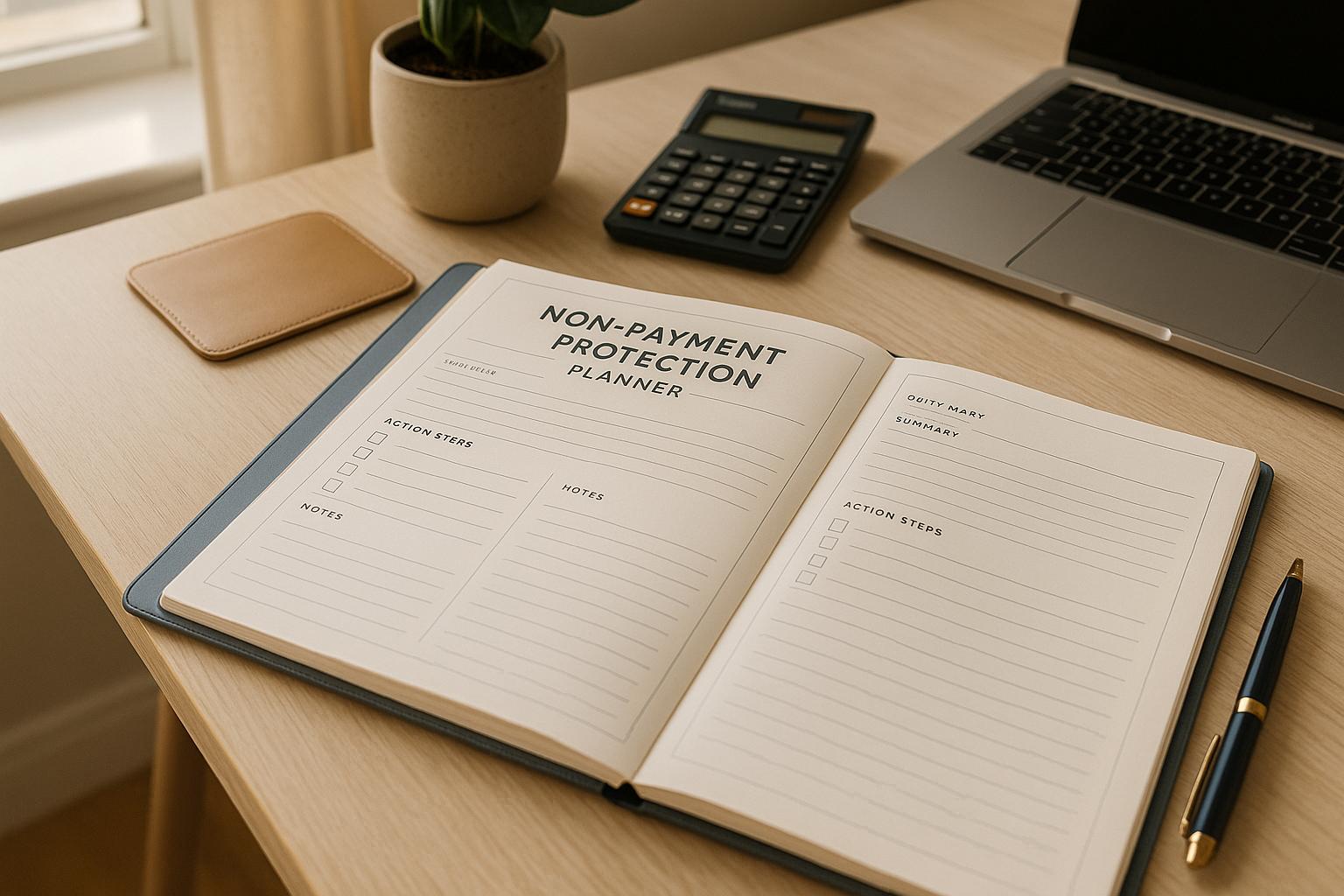
Great question! Our Non-Payment Protection Planner takes a close look at your business specifics—like how much revenue comes from key clients or your typical payment terms. Based on that, it creates a custom action plan with practical steps, such as tightening credit policies or exploring insurance options. It’s like having a financial advisor who knows your exact situation and gives you a roadmap to follow.
Is this tool suitable for small businesses or just larger ones?
It’s designed for businesses of all sizes! Whether you’re a solo freelancer or running a mid-sized company, non-payment risks can hit hard. This planner adjusts to your inputs, so if you’ve got one big client or dozens of smaller ones, you’ll get strategies that make sense for your scale. Small businesses especially benefit from the simple, actionable advice that doesn’t require a huge budget to implement.
How often should I revisit my non-payment protection plan?
I’d suggest checking back every 6-12 months, or whenever there’s a big shift in your business—like taking on a major client or changing payment terms. Markets and client behaviors evolve, so updating your inputs ensures the action plan stays relevant. It only takes a few minutes to tweak things and get fresh recommendations that keep your finances secure.
